Collate.org
Collate was a platform for long-form public correspondence — letters between anyone and the public figures they wanted to reach. It ran from 2021 to 2023 and is no longer operating. This page is a record of what we built, and what happened.
Oliver Kraftman, founder
penned on the platform
within the first six months
including U. of Edinburgh
over twelve months
The idea
Public discourse was forever changed by the internet, just as it was by the printing press before it. But this time the change wasn't all for the good. The format of social media degraded our public conversation — posts shorter than thoughts, comments optimised for likes and clicks rather than truth, and a political playing field that soon began to mirror the new paradigm. The work of leading, informing or understanding our society was now being done by people who were not talking to each other, but to their echo chambers.
On the flip side, these public figures — politicians, journalists, intellectuals and business leaders — are some of the most interesting and sought-after people in society, and they suffer the most abuse online. Even those who wanted to engage productively found it too taxing. Collate was a new place for rich public exchange with constituents, readers, followers or friends — one that made abuse hard and thought easy.
Collate believed that a letter — slow, considered, written to one person but readable by all — is a beautiful medium for exchange. So why not make it digital? We built a platform where anyone could write to a public figure, and where those figures could respond. Every letter was attributed, and none could be shorter than 100 words.
The product leaned into the heritage and aesthetics of letters: long-form pages, serif type, no like-counter. We treated the writer like an adult while not taking ourselves too seriously.
The product
We shipped a fully responsive web platform — homepage, onboarding, letterbox, discovery, search, public letter pages with threaded replies. The visual system leant into the formality of correspondence: a serif display face, generous letter-paper margins, hand-drawn brand illustrations to break the seriousness. Ideas can be light and playful as well as serious and heavy.
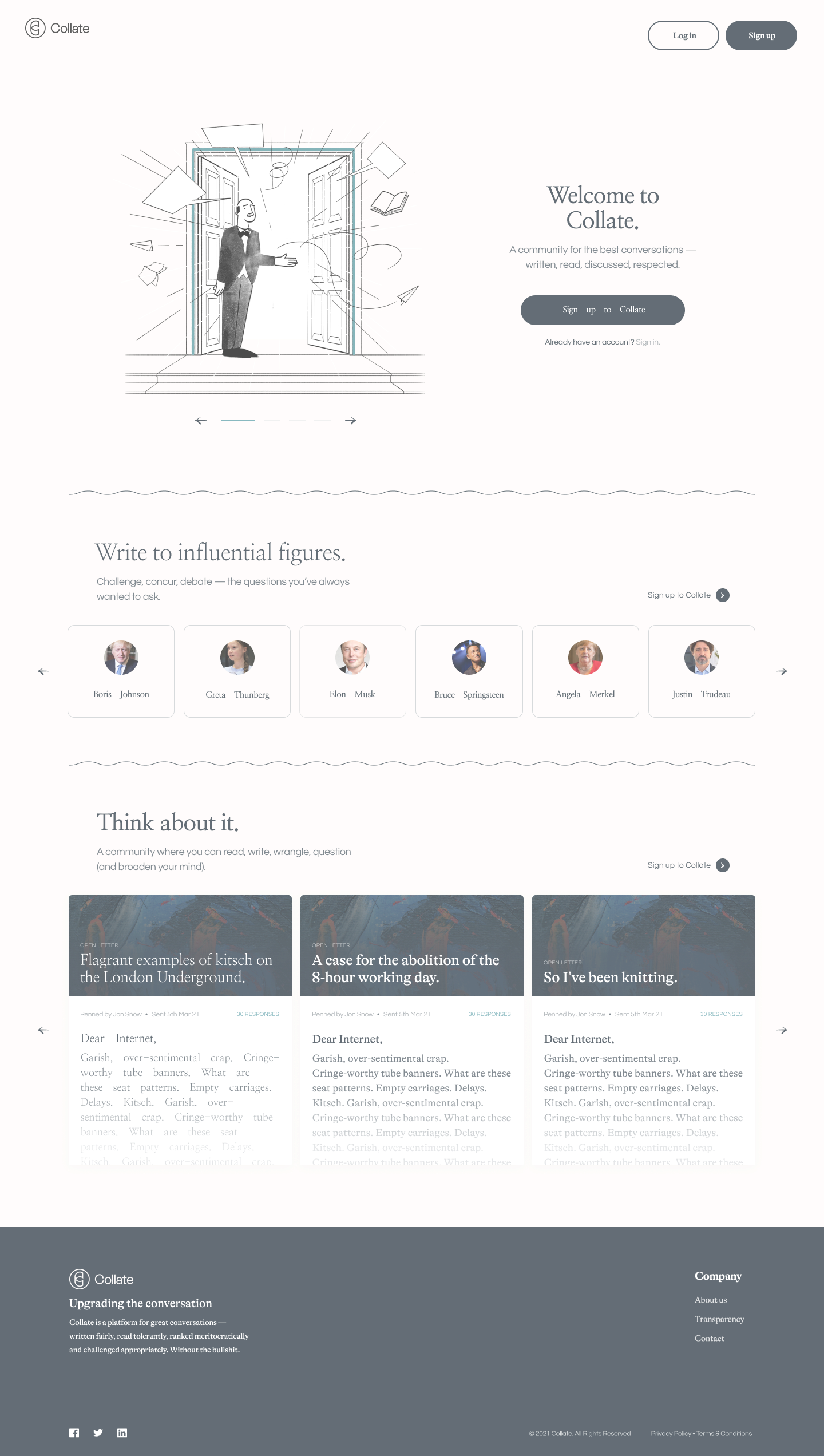
Homepage
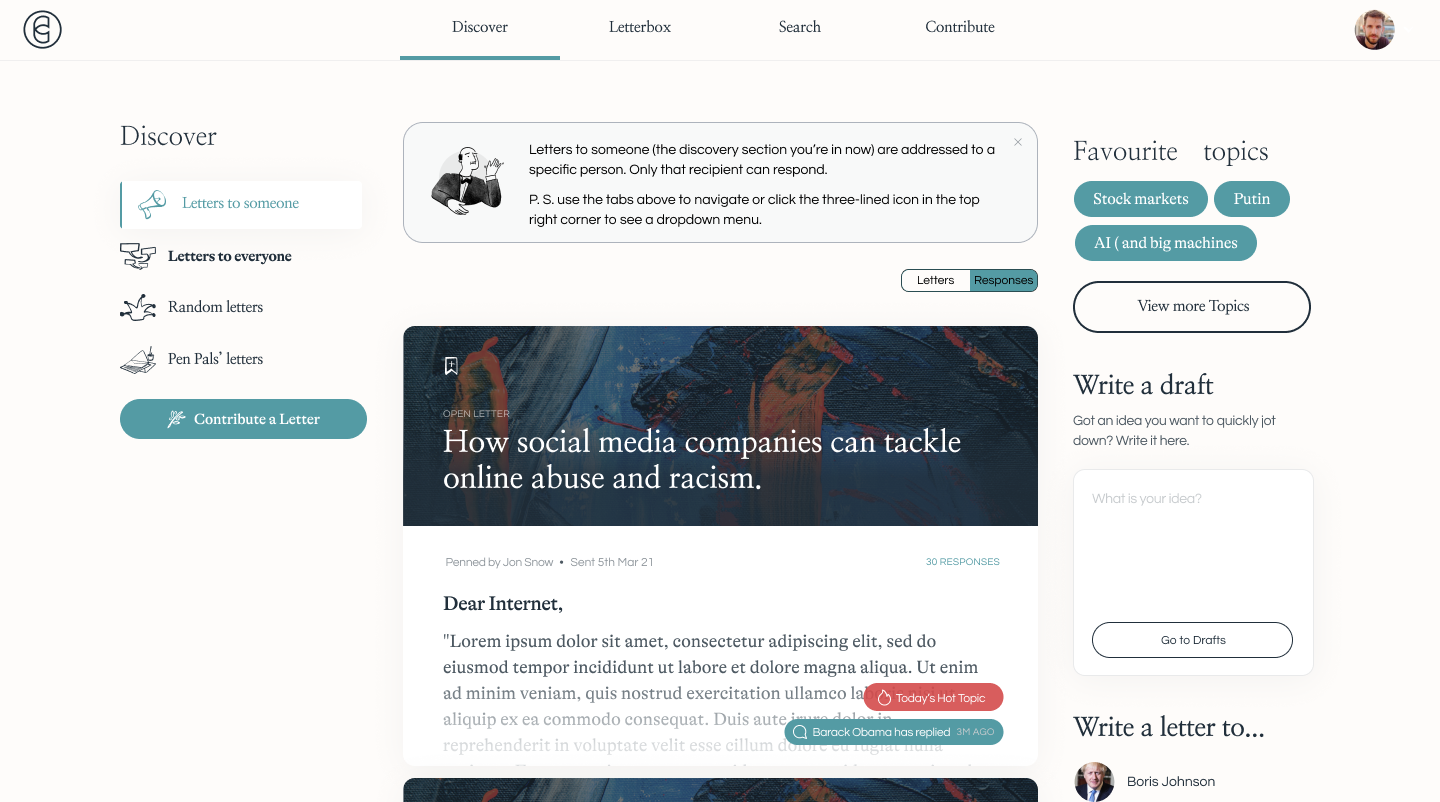

Discover, and a public letter — addressed to a specific recipient, readable by anyone, repliable only by the recipient.
A brand for slow thinking
We commissioned a small library of hand-drawn illustrations — our doorman, readers floating, weightless through a beautiful library, two friends having a meaningful conversation (in a tree), some smaller motifs. They became the brand's voice and the doorman Prescott served to guide our users through their experience.
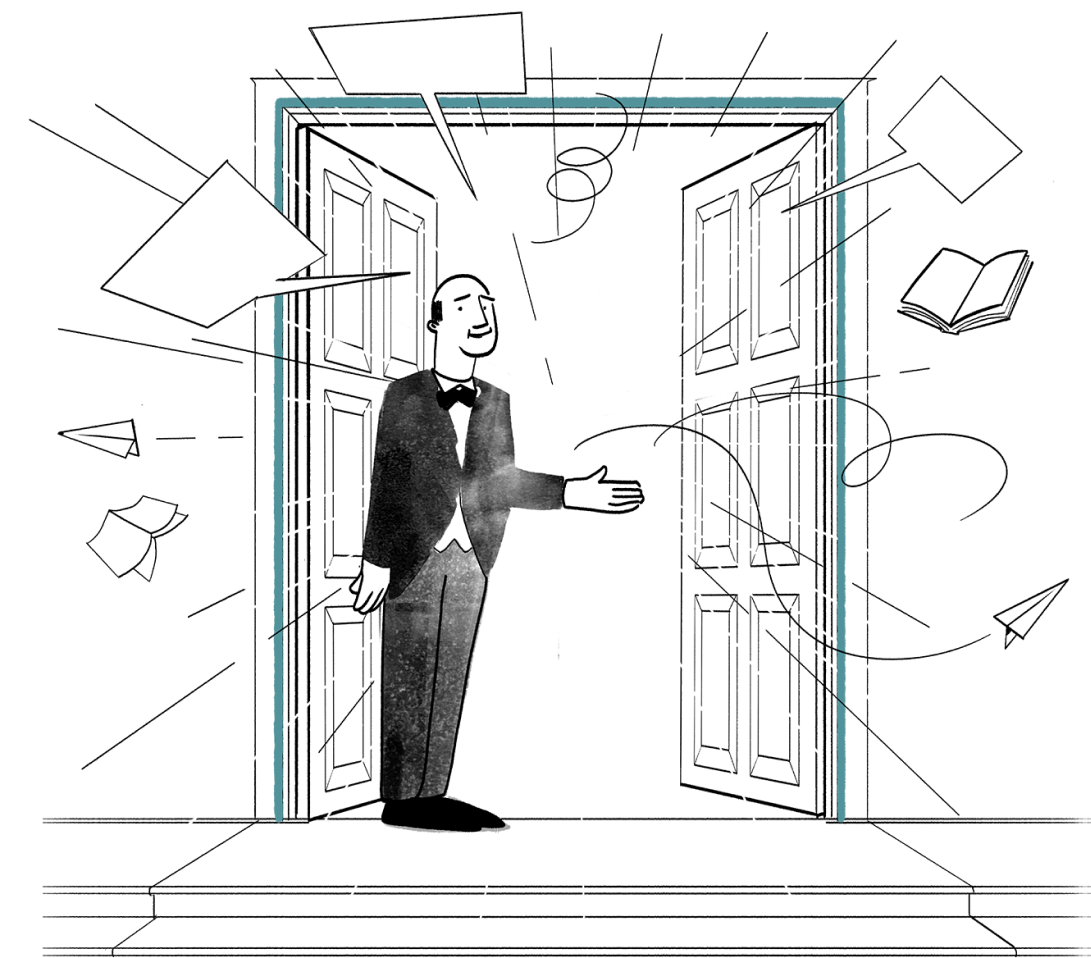







Launching
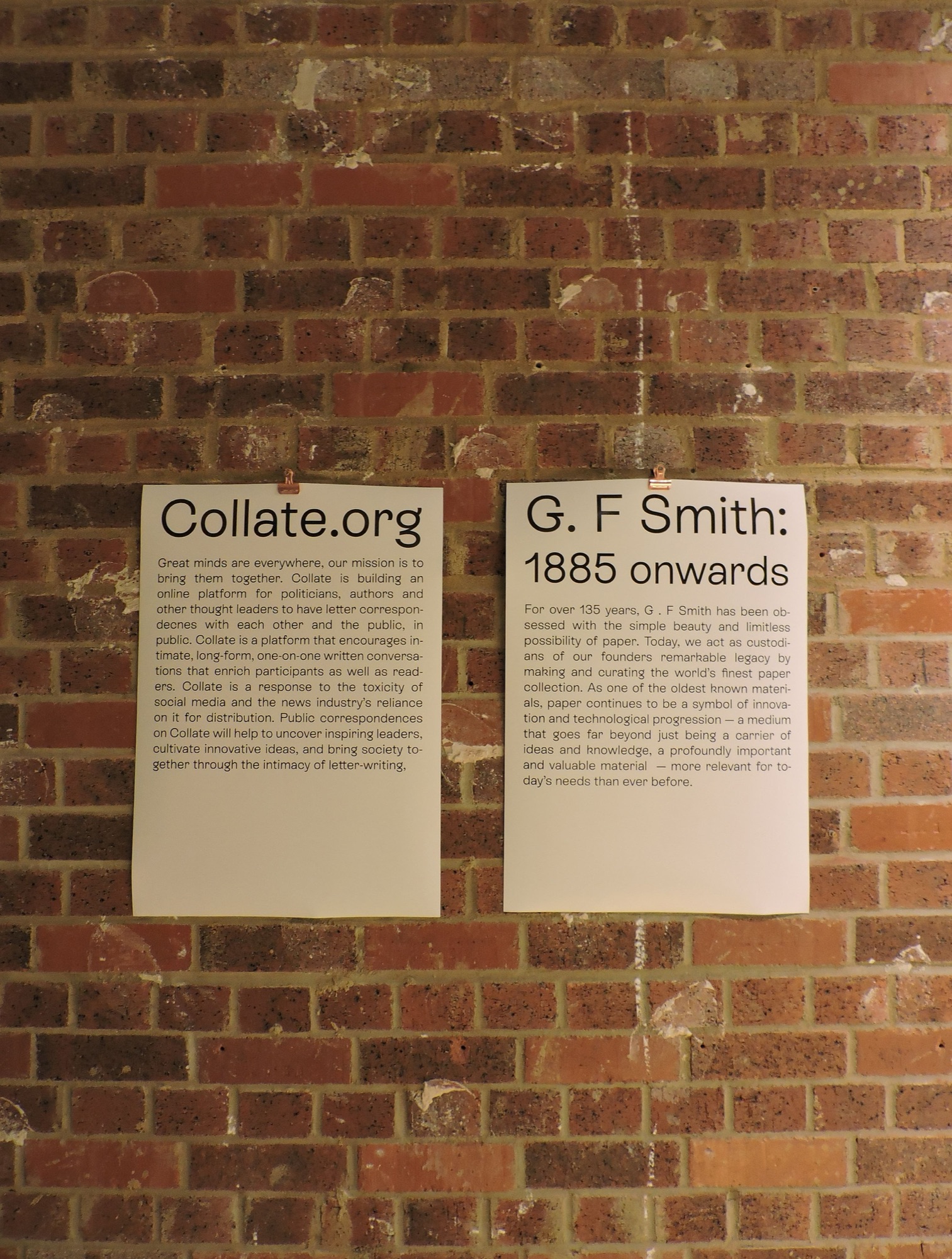
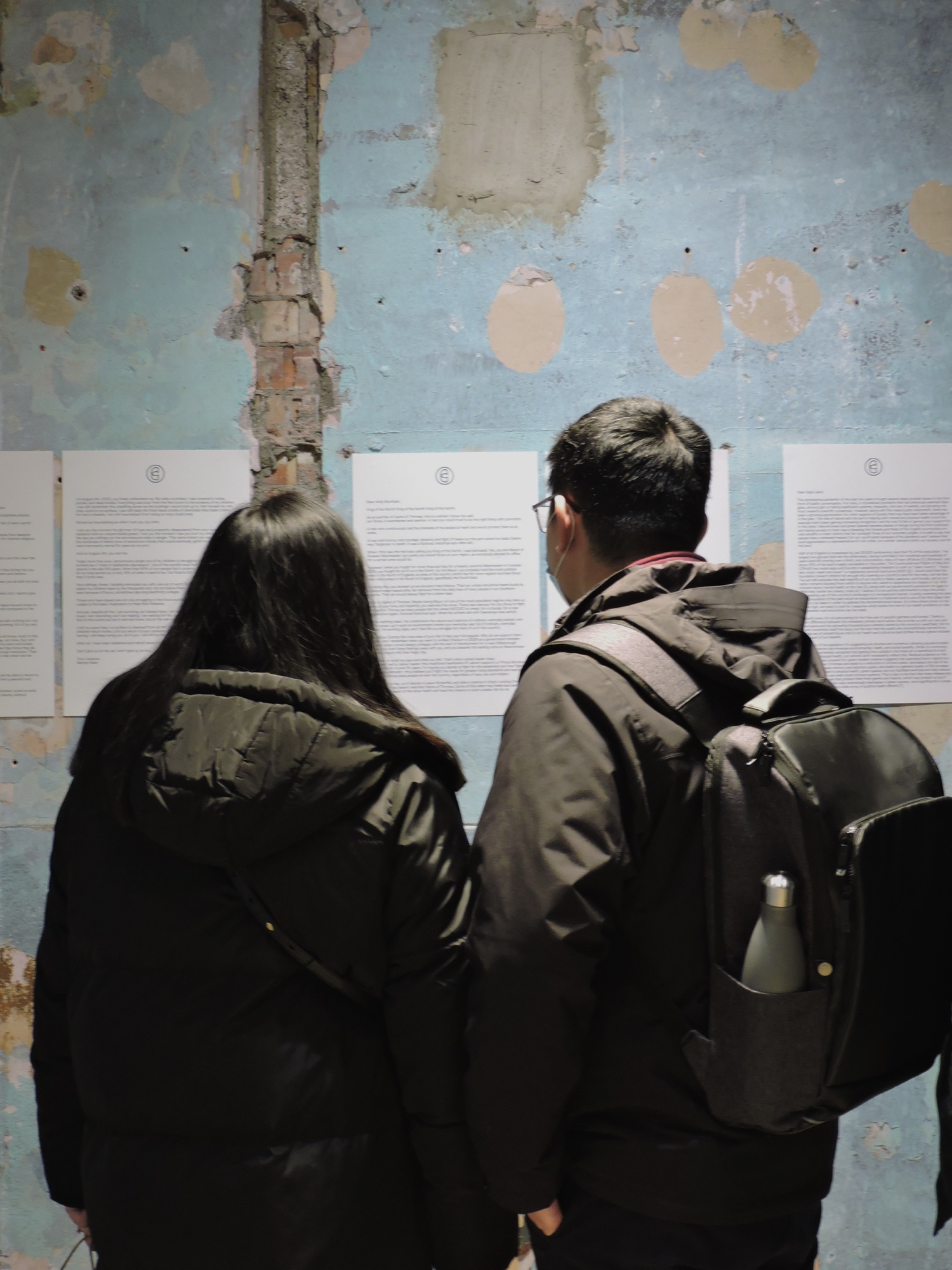
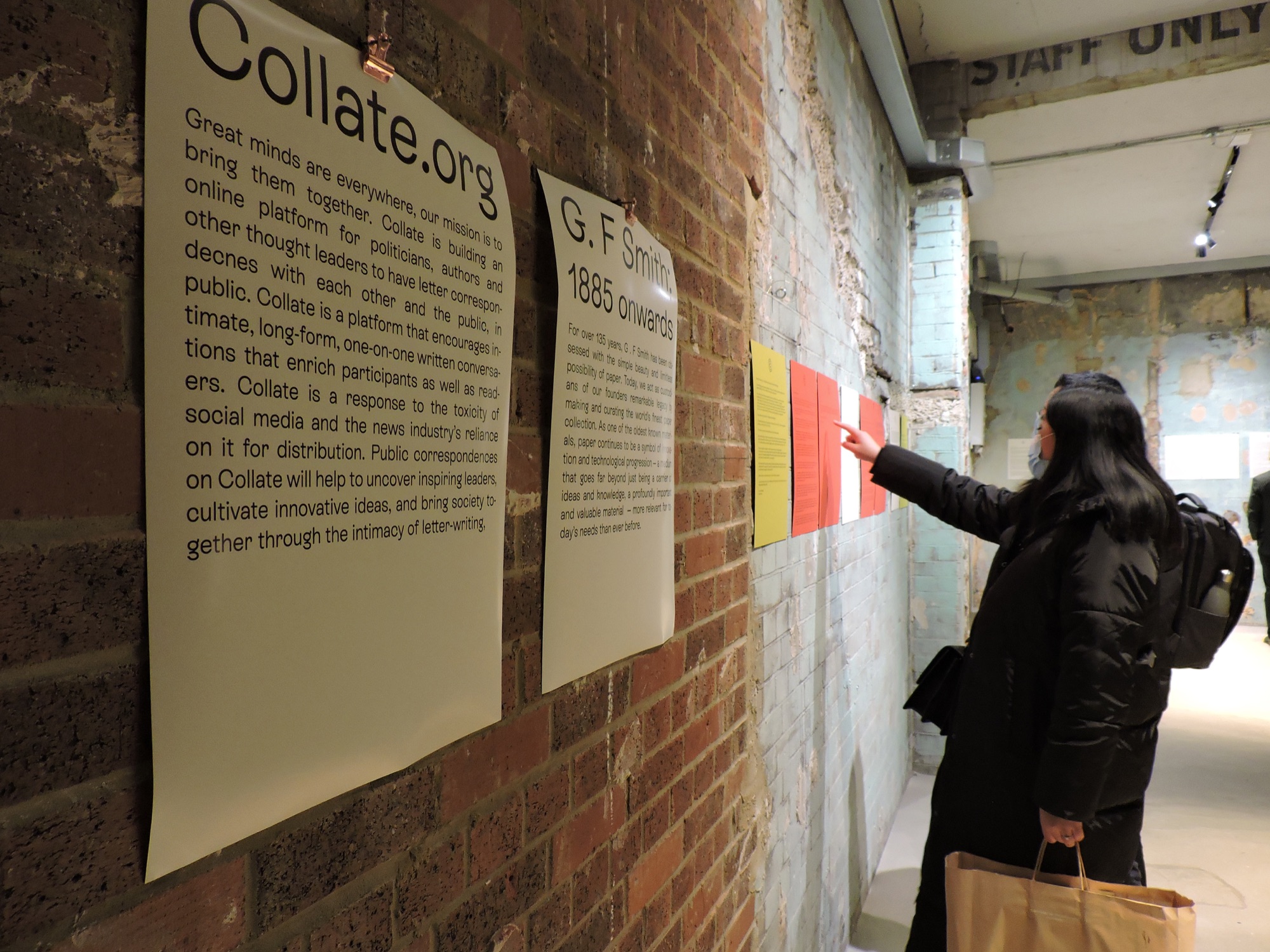
We launched the platform in December 2022 as an exhibition of letters our earliest users had written to public figures.
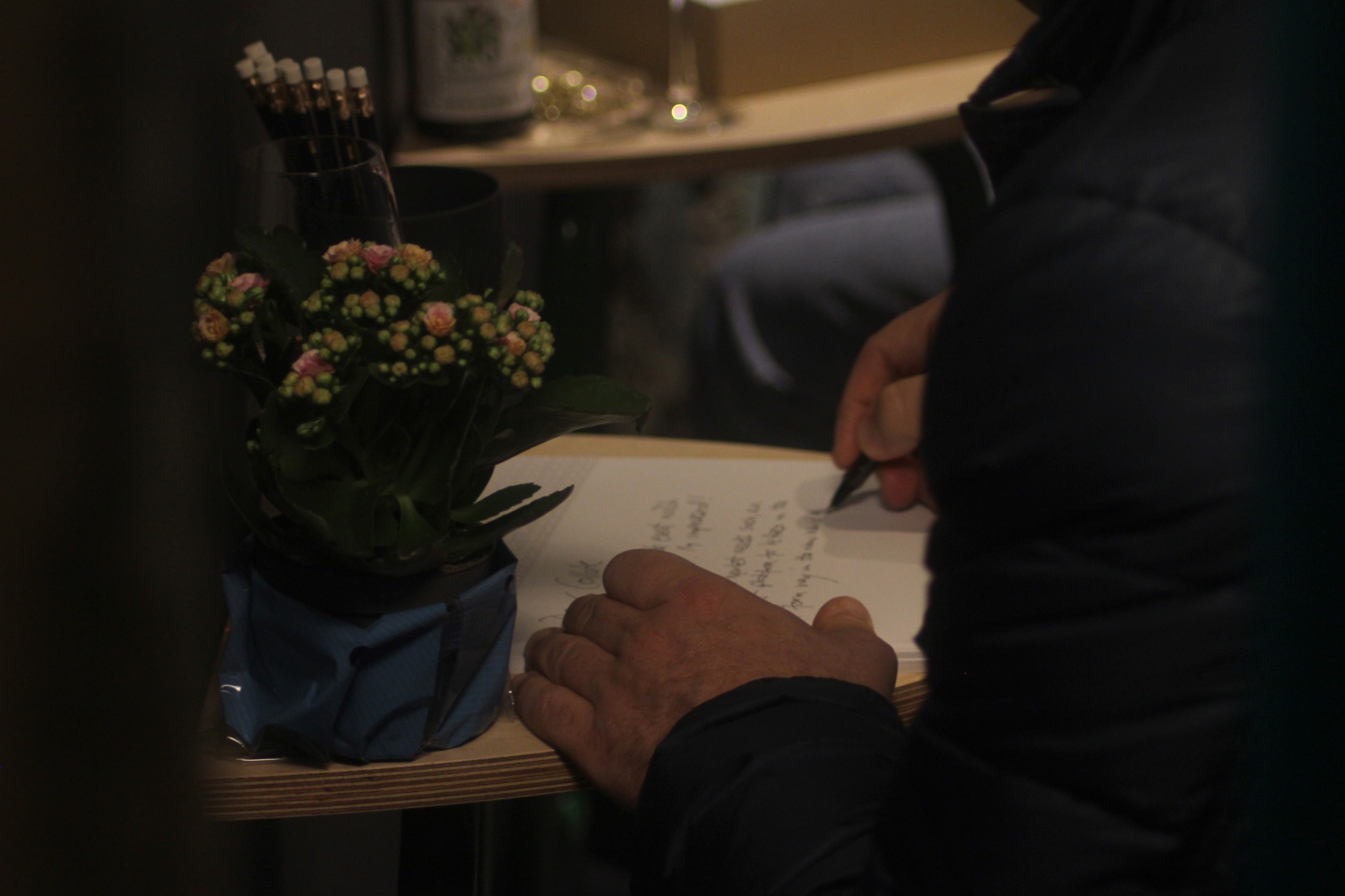
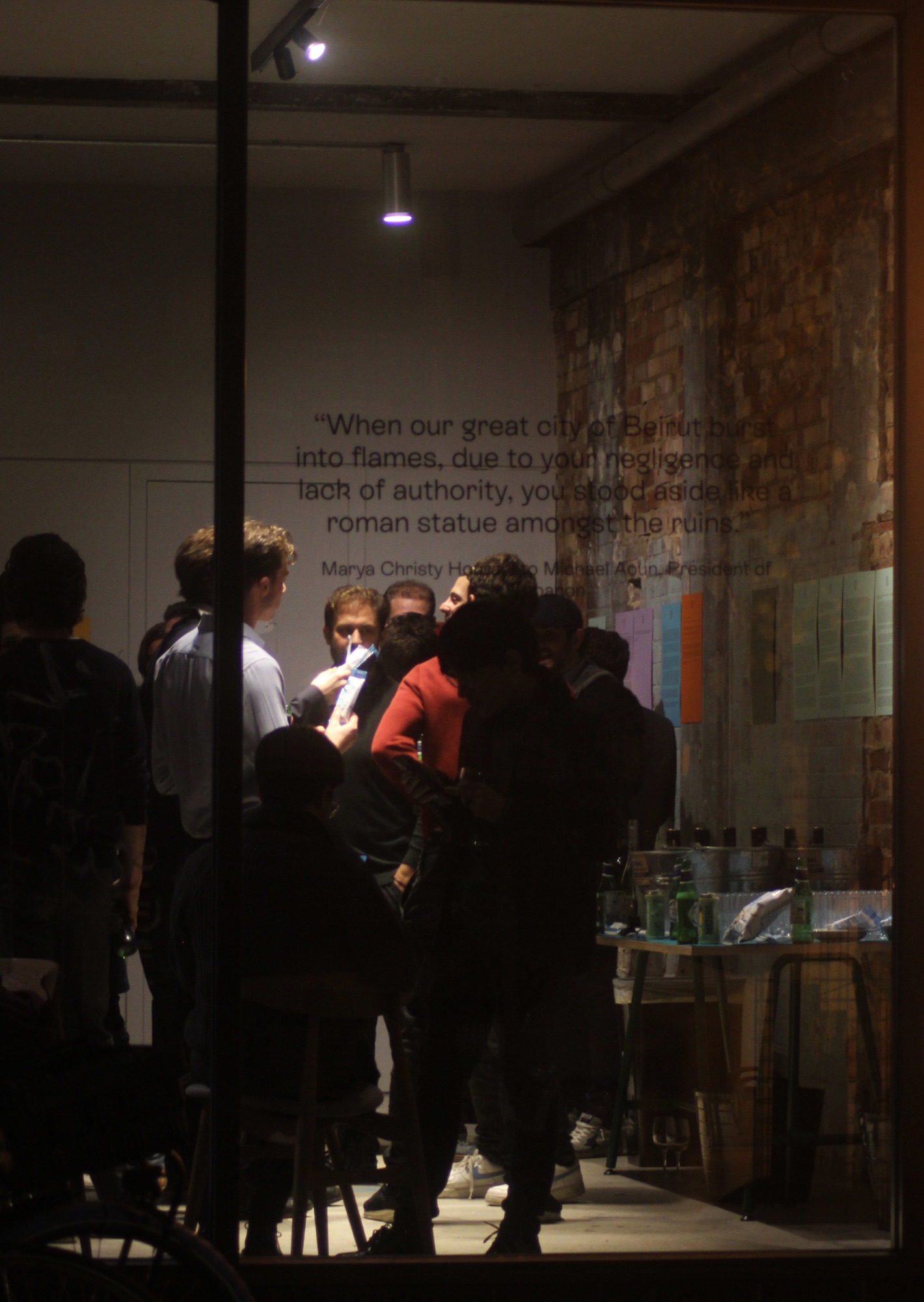
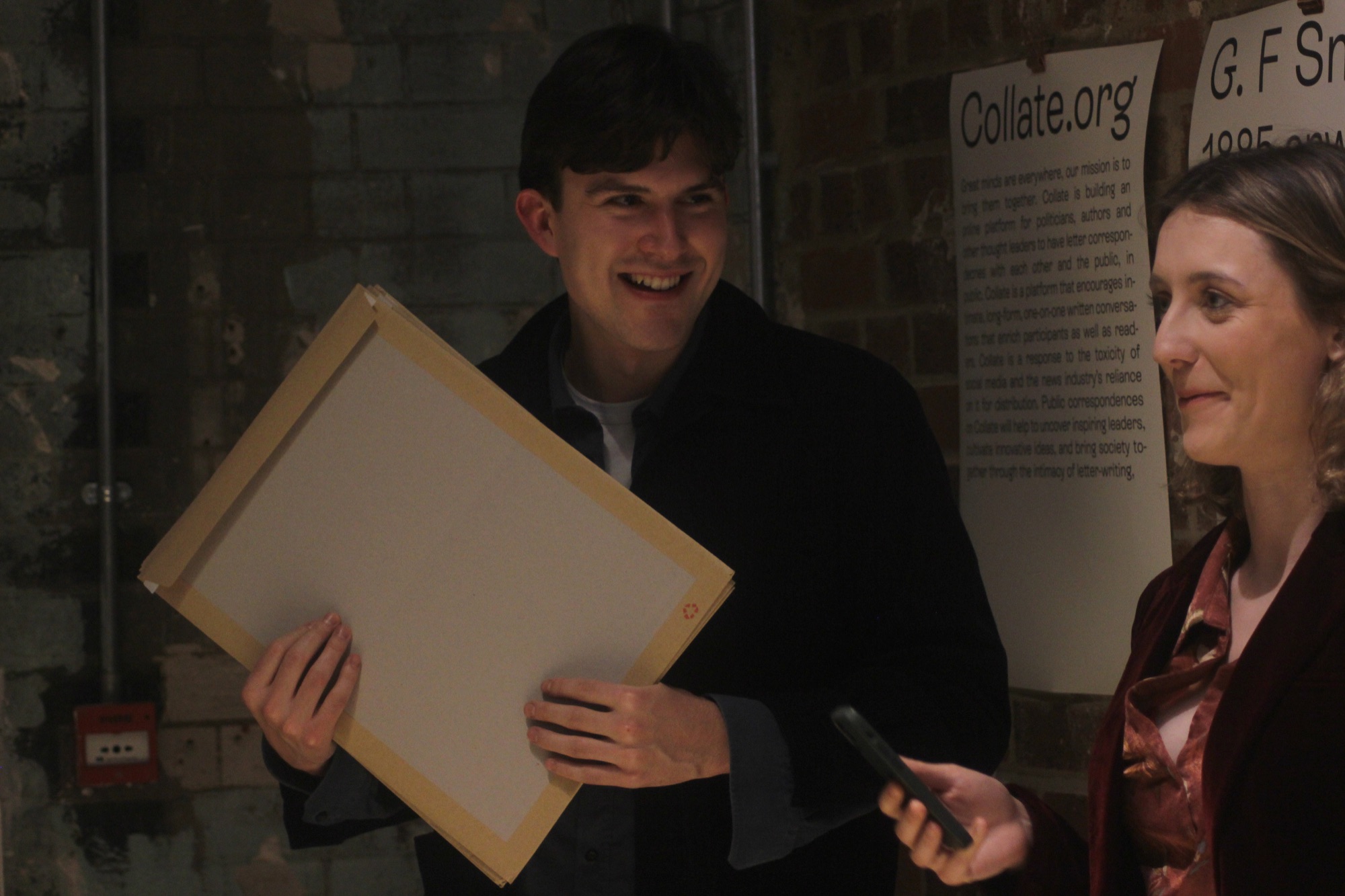
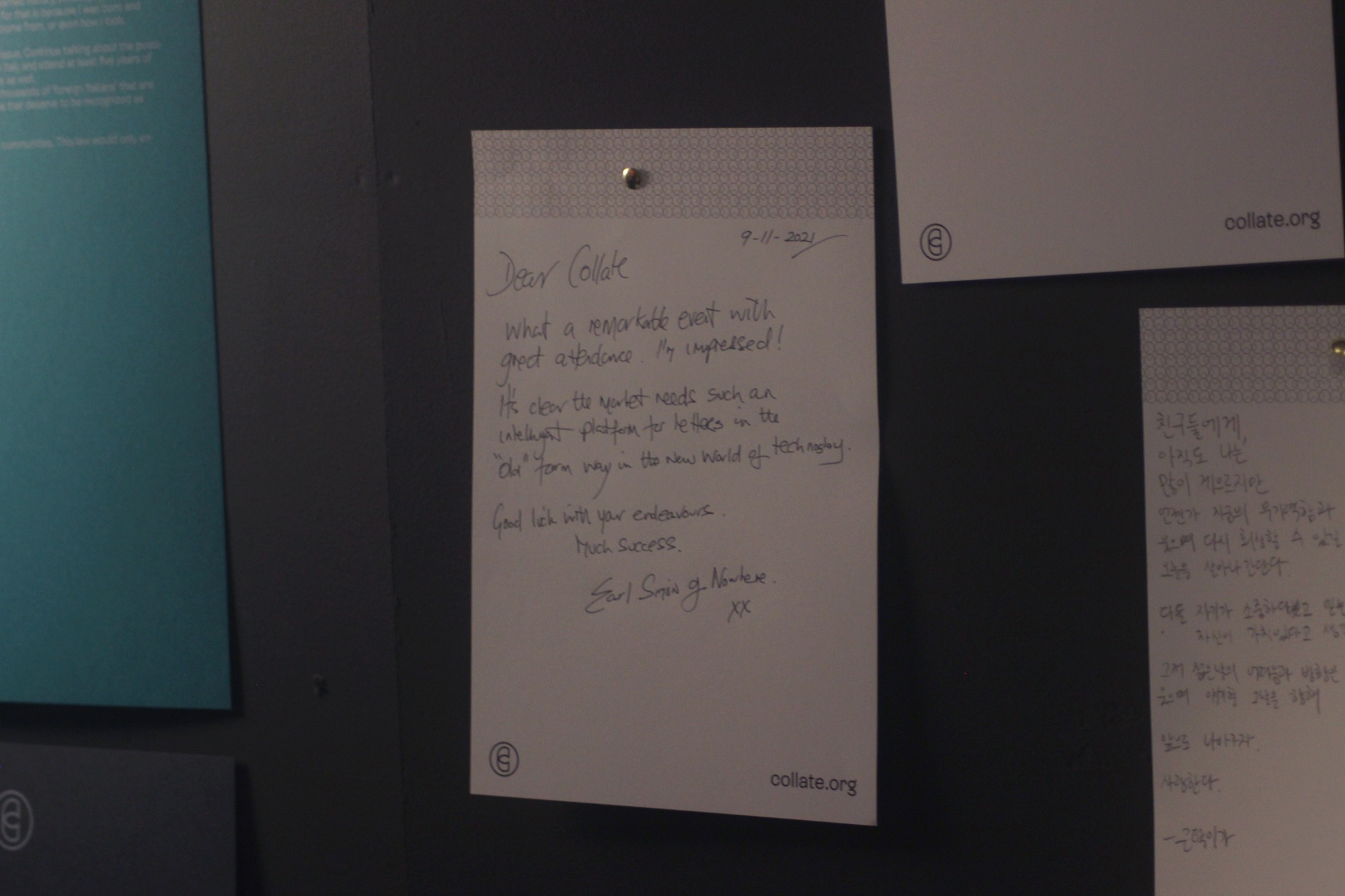

Shoreditch, London. December, 2022.
Quotes from the wall
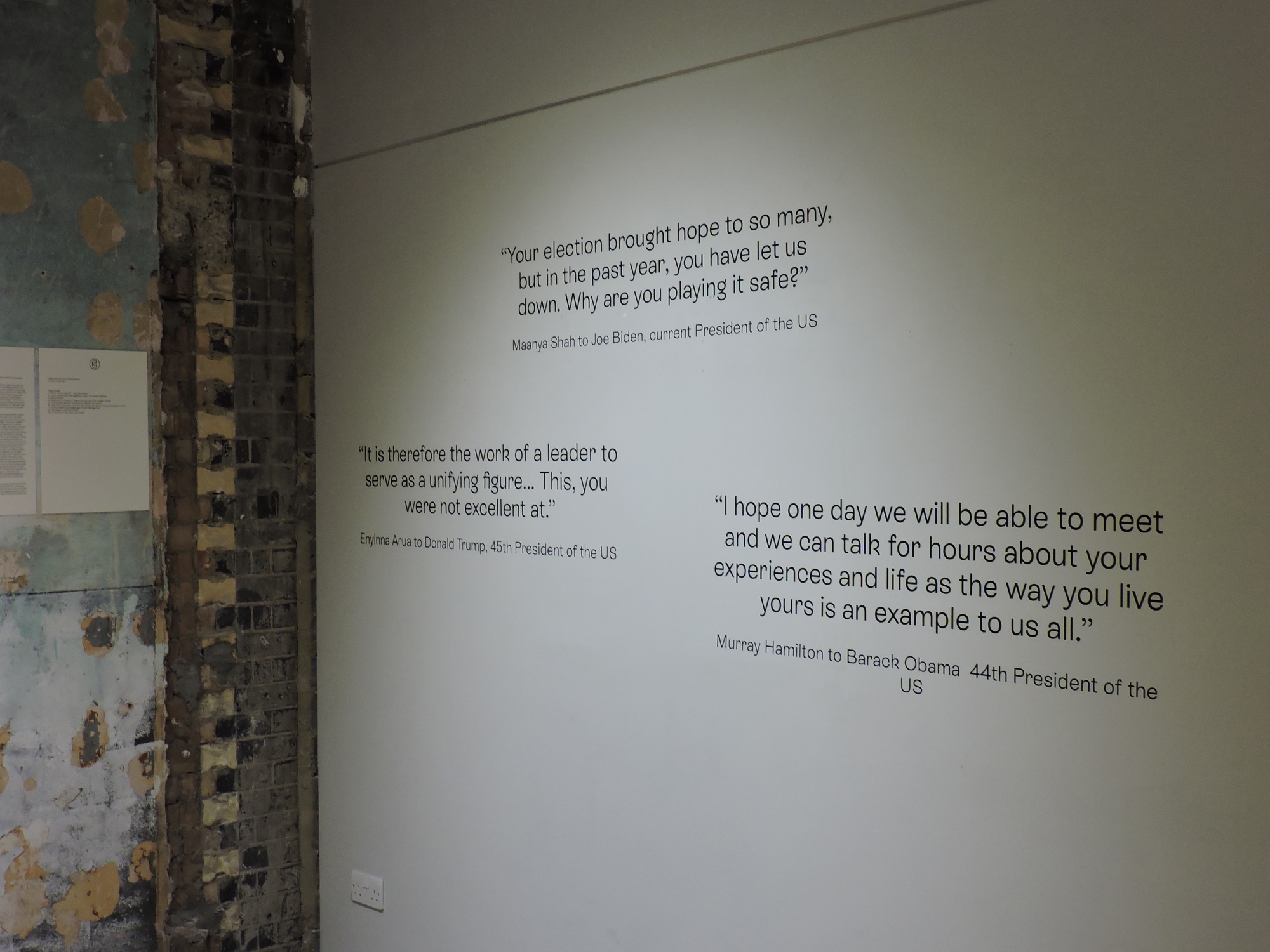
Real letters our users wrote, vinyl-cut onto the exhibition walls. The platform was always meant to be a record of public thought — this is what people chose to put on the record.
“Your election brought hope to so many, but in the past year, you have let us down. Why are you playing it safe?”
then President of the United States
“It is therefore the work of a leader to serve as a unifying figure… this, you were not excellent at.”
45th President of the United States
“I hope one day we will be able to meet and we can talk for hours about your experiences and life as the way you live yours is an example to us all.”
44th President of the United States
In hindsight
Collate ultimately failed to go big. The bet on slowness was correct in spirit but the medium was challenging — we were asking people to write long posts and read more in an internet environment oversaturated with content. Podcasts which were already big, have really taken over the long-form conversation space and the medium fits much better. Interviewers can act as gatekeepers and curators, and the audio is easier to consume passively.
It was also a personal decision. I still believe the idea of an artisanal platform centred around long-form writing and conversation has potential in some form. But I was struggling to feel confident that I had it in me to keep iterating on this problem for a few more years while trying to build a life with my then girlfriend (now wife) living at my parents' house, with limited access to a team to increase leverage or experienced colleagues I could learn from. After deciding to wind Collate down, I was quietly relieved to be done with early-stage startup life for a while. Getting a job, working alongside experienced people, a nice office, genuinely world-class clients — it was an opportunity to expand my toolkit, build my network, and start nurturing new ideas (moving out of my parents' house was a bonus)
The lessons I learned at Collate can be summarised as follows:
- Founder-fit has two aspects, the capability to make a startup successful and the personal circumstances to ensure that capability can be fed, grown and sustained.
- Enthusiasm and grit is not enough, you need cold analysis that ensures your energy is pointed in the right direction.
- Conviction in your idea/product or problem/opportunity can make the first two irrelevant or solved, but the bar for conviction needs to be very high and you need to have the self-awareness to know when it's not there.